|
|
The
Baal Shem Tov, or Besht — the founder of Chasidism —
|
|
|
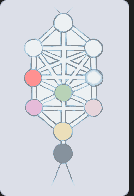
Ushpizata: Inviting the Mothers Imahot to the SukkahThe Ushpizata liturgy (feminine for Ushpizin) described below uses a Kabbalistic order for the mothers. The order is: Ruth, Sarah, Rivkah, Miriam, Devorah, Tamar, Rachel, plus Leah as Binah. (For Reb Zalman's order, click here.) The Ushpizata liturgy includes Kabbalistic invocations, Sefirot, and prayers for peace, all based on traditional Sefardic nusach. Click here to download the 2-page pdf with the full service, or click here to read just the English.Where are the mothers on Sukkot? Why don't we traditionally invite them into the sukkah the way we do the fathers? These are not just rhetorical questions, and the answer isn't just "patriarchy". The point of this page is to provide some liturgy for inviting the mothers, but also to understand the traditional prayers, so that the new liturgy is a direct extension of what came before.
For the fathers, these correspondences are very strongly established in the Zohar and other Kabbalistic literature, and there are no well-grounded alternative orders. For the mothers, however, the correspondences with the lower Sefirot are much less stable, with the major exception of Rachel Imeinu, who is always Malkhut. To the extent that other female figures are mentioned in Kabbalah, they most often also symbolize Malkhut. For example, in Gikatilla in Sha'arey Orah writes, "In Abraham's time Malkhut was called Sarah; in Isaac's time Malkhut was called Rivkah, and in Jacob's time Malkhut was called Rachel." There are only two strong correspondences between any mother and a particular sefirah besides Malkhut-Rachel. They are between Tamar and Yesod, and between Leah and Binah. Furthermore, because Binah is above Chesed, and not one of the lower seven Sefirot, it doesn't get its own day of Sukkot. That means that any liturgy for the Imahot, if it's going to be based on the Kabbalah, can't include Leah as one of the seven ushpizin (or, in the feminine, ushpizata). As an aside, the Kabbalistic significance of Leah being Binah and Rachel being Malkhut is that Binah and Malkhut are the upper and lower mother (imma ila'ah and imma tata'ah), or (alternatively), the upper and lower feminine, or mother and daughter. The reason why Jacob has to marry both Leah and Rachel because he is the symbol of Tif'eret, the lower masculine, which stands between Binah and Malkhut and connects them. Tif'eret-Jacob must be in conjunction with both Binah and Malkhut in order for the chain of emanation (seder hishtalsh'lut) to be unbroken and for the world to be sustained. The whole point of the liturgy of Ushpizin in fact is to invoke the energies of the seven lower Sefirot in the proper order, so that Shefa, blessing and sustenance, can be drawn down into the world. This is the essence of Kabbalistic liturgy, and a liturgy of the imahot would only make sense if it were to follow that pattern. That means we have the playfully serious task of finding a stable order for the imahot where no clear order exists. There are a number of proposals out there for how to do this. The liturgy I am sharing here uses only the most traditional texts (1) to establish the "right" order, and you can also find below Reb Zalman's order and the order for the seven "prophetesses" from Azariah deFano. So, here is our list of correspondences between the mothers and the seven lower Sefirot:
One thing you may have already considered is that it's not clear which of the other women besides the four matriarchs (2) should be included. Dinah, Hannah, Hulda, Esther and many others come to mind besides the ones we've already mentioned. Because allusions to the other foremothers, besides Sarah, Rivkah, Rachel and Leah, are so infrequent as compared to the forefathers, it's hard to know which allusion is the most important, both with respect to which figure to use and with respect to which Sefirah she should represent. There is one clear text that assigns a Sefirah to each of the "seven prophetesses" which is quite different than the above order. Menachem Azariah deFano (3) gives this order in his work Asarah Ma'amarot: Sarah, Chesed; Miriam, Gevurah; Devorah, Tif'eret; Hannah, Netzach; Avigail, Hod; Hulda, Yesod; Esther, Malkhut. This order doesn't feel to me like the one we should base ushpizin on however: only one of the matriarchs is represented, and the three very strong correspondences between the Sefirot with Leah, Rachel and Tamar are left out. We might make a distinction for this question between the seven n'viot prophetesses, and the seven mothers. Reb Zalman's order is also quite different, with Sarah at Hod! The rest are: Miriam, Chesed; Leah, Gevurah; Hannah, Tif'eret; Rivkah, Netzach; Tamar, Yesod; Esther and Ruth, Malkhut. (4) (Download Reb Zalman's explanation below.) You can also find other liturgies, sukkah posters, etc. that add the imahot to the Ushpizin in different ways on Ritualwell. It would be easy to plug deFano's order or Reb Zalman's order (or any other order you're attached to) into the liturgy I've created, with the simple proviso that if Leah is included in the lower seven, one would leave out the mention of her name where it's used as an epithet for imma ila'ah near the beginning. (This line is the one that immediately precedes the invitation, Ulu, ulu.) In all cases, making space for a liturgy that includes the imahot, especially where there is absolutely no halakhic rule about something needing to be said, seems not only good but imperative. May this action add to our "building the stature of the Shekhinah" (5) to bring redemption nearer. Download the pdf! (Clear your cache or open in a new window if you ever downloaded an earlier version and want the final version.) Notes: ~~~~~~~~~~~~~~~~~~~~~~~~~~~~~~~~~~ |
|
|
Design in progress © Rabbi David Mevorach Seidenberg 2006 |